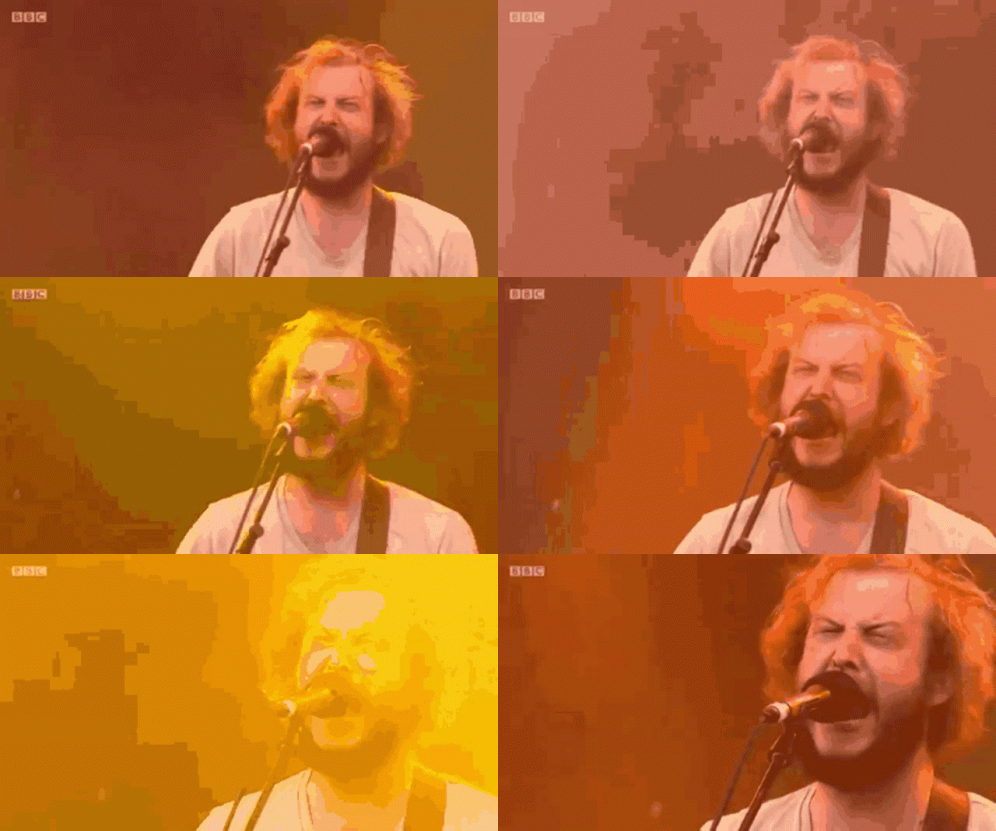
There’s something bittersweet about listening to Bon Iver’s “Holocene” or Young the Giant’s “Cough Syrup” in 2026. These songs, and the era they represent, feel like relics from a different world, one where unpolished vulnerability and artistic experimentation could actually dominate popular music.
The 2010s indie boom gave us Arcade Fire headlining festivals, Fleet Foxes selling out theaters, and Sufjan Stevens topping year-end lists. This wasn’t niche music for coffee shop regulars anymore. It was genuinely mainstream, yet defiantly artistic. Artists like Tame Impala, Vampire Weekend, and MGMT created challenging, personal work that somehow found massive audiences. The last time this happened? The early 90s, when Nirvana, Jeff Buckley and Radiohead proved that eclectic could also mean popular.
What made the 2010s special was the collision of accessible distribution (Bandcamp, SoundCloud) and an audience hungry for something real after the manufactured pop of the 2000s. Indie artists could bypass traditional gatekeepers while maintaining creative control. The algorithm hadn’t yet learned to flatten everything into easily digestible content.
Fast forward to today, and the landscape feels different. TikTok virality demands hooks in the first three seconds. Streaming economics push artists toward safe, playlist-friendly singles. The algorithm rewards consistency over experimentation, familiarity over risk.
But here’s the thing: the conditions that created the 2010s renaissance weren’t unique; they were cultural. What we need isn’t a new technology, but a new appetite. We need listeners willing to sit with a seven-minute song that doesn’t reveal itself immediately. We need platforms that value depth alongside virality. We need artists who prioritize vision over metrics.
The tools exist. Bandcamp still thrives, despite it now being largely musician-seeks-musician. Independent labels are innovating. Artists can self-release with unprecedented ease. What’s missing is the cultural permission to be challenging, to be slow, to be art-first in an attention-economy world.
The return won’t look like the 2010s; it never does. But it could happen when enough people get tired of algorithmic sameness and start seeking music that demands something from them. When we stop treating songs as background noise and start treating them as art worth our full attention. When the mainstream remembers that sometimes the most popular thing can also be the most uncompromising.
That era doesn’t have to be over. It just requires us to choose it again.
 DREW MAZUR