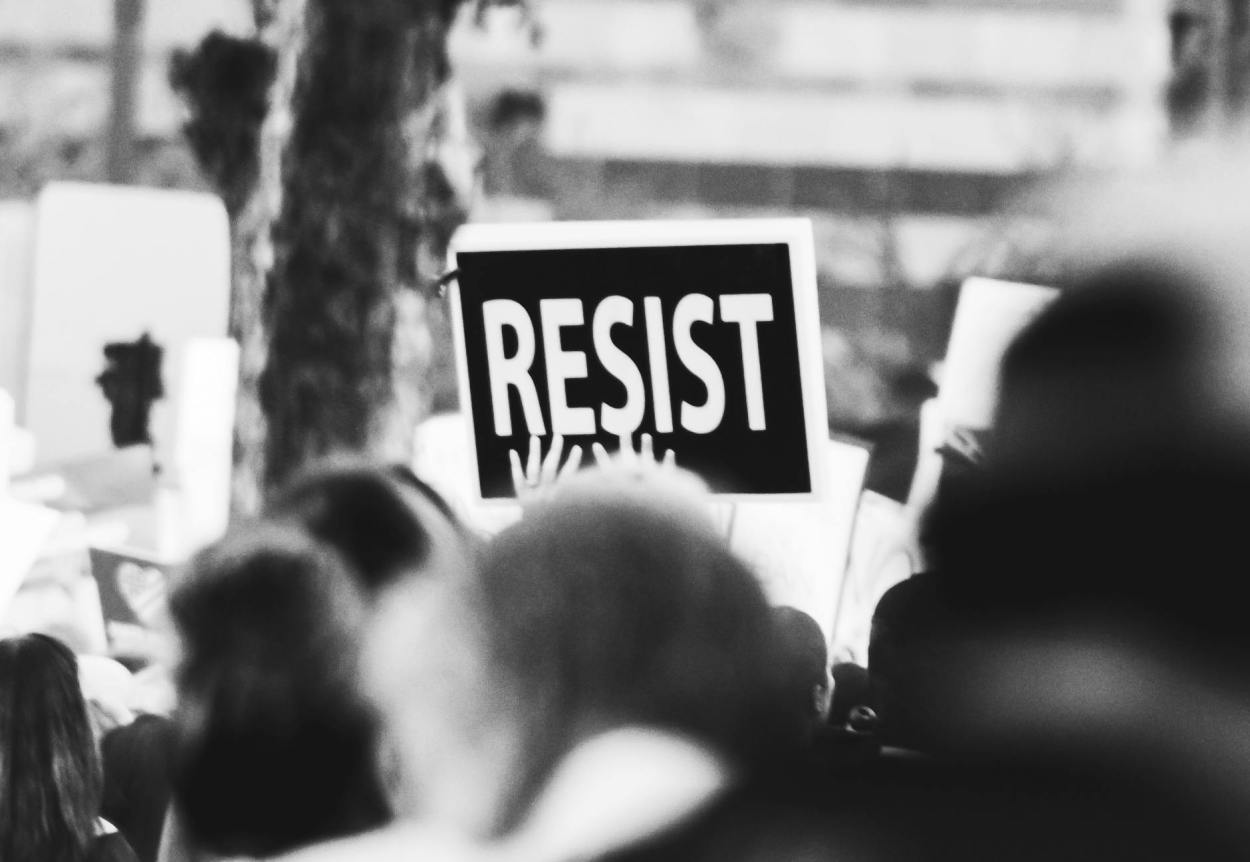
There’s a tired refrain that surfaces whenever a musician speaks out on social issues: “Stick to music.” It’s dismissive rhetoric that treats artists as court jesters: valued for entertainment, but expected to remain silent on matters of consequence. This view fundamentally misunderstands both the role of art in society and the responsibilities of citizenship. Musicians aren’t just permitted to engage politically; they can offer genuinely valuable models of social engagement when they bring the same craft, nuance, and critical thinking to their advocacy that they apply to their art.
Different Paths, Equal Validity
Consider the spectrum. Billy Joel has built a legendary career on storytelling that captures the American experience without explicit political messaging. Songs like “Allentown” document the plight of Pennsylvania steelworkers facing economic decline, “The Downeaster Alexa'” chronicles Long Island fishermen struggling against pollution and government regulations that devastated their industry, and “Goodnight Saigon” stands as one of the most powerful Vietnam War songs ever written, not through protest or polemic, but through immersive first-person narrative that honors the lived experience of soldiers. As Michael Citro explained regarding an interview with Joel’s drummer, Liberty DeVitto, the song showed “empathy for those who fought and what they went through, rather than just serving as a protest” (Citro, 2022). There’s real artistry in that restraint, in trusting the story to speak for itself.
On the other end, you have Neil Young pulling his music from Spotify in January 2022 after the platform refused to remove episodes of Joe Rogan’s podcast featuring guests who spread COVID-19 misinformation. Young, who had roughly 6.6 million monthly listeners on Spotify, issued an ultimatum and published in the Washington Post: “They can have Rogan or Young. Not both” (Andrews, 2022). His action sparked a broader movement. Joni Mitchell, Graham Nash, and several other artists followed suit, and over 270 medical professionals had already signed an open letter urging Spotify to moderate misinformation (Andrews, 2022). Then there’s Green Day’s “American Idiot,” released September 21, 2004, which became a full-throated critique of the Bush administration and the Iraq War. The album sold over 23 million copies worldwide, won two Grammys, and inspired a Tony-winning Broadway musical (Wikipedia, 2025). Frontman Billie Joe Armstrong told Spin he wanted the work to be timeless: “I would never think of American Idiot as being about the Bush administration specifically. It’s about the confusion of where we’re at right now.”
Both approaches have merit. Joel’s narrative approach invites a broader identification and reflection. Young and Green Day’s directness can galvanize movements and give voice to urgent concerns. The key isn’t which path an artist chooses; it’s whether they pursue it with integrity and thoughtfulness.
What Musicians Bring to the Table
The demand that artists “stay in their lane” ignores what makes their perspectives valuable, and it dismisses a rich historical precedent. During the 1960s, protest music became among the most powerful means of voicing opposition to the Vietnam War. Artists like Bob Dylan, Joan Baez, and Phil Ochs didn’t just entertain; they gave political voice to young people who, until the 26th Amendment in 1971, couldn’t even vote despite being subject to the military draft.
At the first major antiwar rally in Washington in April 1965, Judy Collins sang Dylan’s “The Times They Are A-Changin'” and Joan Baez led “We Shall Overcome.” These weren’t peripheral contributions but rather central to movement-building. As historian H. Bruce Franklin noted, “Some of the first organized activities against the Vietnam War centered on the singing of songs at concerts, in clubs, and on campuses.” By October 1969, half a million demonstrators sang John Lennon’s “Give Peace a Chance” at the Vietnam Moratorium Day protest in Washington. The Civil Rights Movement similarly found strength in music, with songs like Sam Cooke’s “A Change is Gonna Come” and “We Shall Overcome” becoming anthems that carried messages of protest across the nation. Musicians spend careers developing observational skills, emotional intelligence, and the ability to distill complex experiences into resonant expression. These aren’t trivial talents when applied to social issues.
Great political art, and political engagement by artists, doesn’t lecture. It illuminates. It draws connections others might miss. It makes the abstract personal and the personal universal. When done with grace and critical thinking, it expands conversation rather than shutting it down.
The Responsibility of Platform
Musicians with significant audiences face a choice about how to use their platform. What matters is that the engagement feels genuine rather than performative, informed rather than reflexive, and open to complexity rather than reductive.
Young’s Spotify protest wasn’t impulsive. It came after 270 medical professionals raised alarms about misinformation reaching Rogan’s estimated 11 million listeners per episode (The Conversation, 2022). Young stated clearly: “I am doing this because Spotify is spreading fake information about vaccines, potentially causing death to those who believe the disinformation” (Andrews, 2022). Even the WHO director-general praised his stance (Datebook, 2022). Green Day’s political evolution shows similar intentionality. Armstrong told Rolling Stone in 2005 that while “the atmosphere can be anti-Bush,” ultimately, “when you get down to it, it’s a human story.” The band has continued this engagement. In 2019, Armstrong changed the lyrics from “I’m not part of a redneck agenda” to “I’m not part of a MAGA agenda” (Wikipedia, 2025), and in July 2024, he held up a mask of Donald Trump marked “IDIOT” at a concert mere days after an assassination attempt (Snopes, 2024). The message adapts, but the commitment to critical engagement endures.
An artist who has clearly wrestled with an issue and brings a unique perspective shaped by their experiences contributes something meaningful. An artist who simply echoes talking points or uses controversy for attention does not.
Grace and Critical Thinking as Guiding Rails
Political art must be done with grace and critical thinking. This means acknowledging uncertainty where it exists. It means being willing to evolve positions as you learn more. It means recognizing that a gift for melody doesn’t automatically confer expertise in policy. Armstrong himself acknowledged this tension, telling Spin, “We always wanted our music to be timeless. Even the political stuff that we’re doing now.” The 1960s antiwar movement understood this, too. Musicians weren’t politicians; they were young and impacted by war, the draft, and violence, which led them to object through music.
It also means understanding that your audience isn’t monolithic, despite what social media would have you believe. The same craft that makes a love song resonate across different experiences can inform political expression that invites rather than alienates, that challenges without condescension.
The Conservative Voice in Protest
The conversation about political music often overlooks that protest isn’t exclusively liberal or left-wing. Merle Haggard’s “Okie from Muskogee” gave voice to Americans alienated by 1960s counterculture, while Toby Keith’s post-9/11 work channeled grief and anger many felt but saw dismissed in mainstream culture. What’s revealing is the inconsistency; critics who celebrated Vietnam-era protest often condemned country artists supporting the troops, and vice versa.
The objection was never really about musicians being political, but it was about them expressing the “wrong” politics. The marketplace of ideas is stronger when it includes voices across the spectrum, each held to the same standard: genuine engagement and respect for complexity. Whether an artist leans left or right matters less than whether they bring the same craft and critical thinking to their advocacy that they bring to their music.
Citizens First, Artists Second
Ultimately, the expectation that musicians remain apolitical rests on a strange assumption: that choosing art as a profession somehow revokes citizenship. Musicians vote. They pay taxes. They’re affected by policy decisions about healthcare, education, climate, and war. They raise children in communities shaped by political choices. The question isn’t whether artists have the right to political expression; that’s one of the most basic principles of democracy. The question is whether they’ll bring the same dedication to craft and truth when engaging with social issues that they bring to their music.
When they do, whether through Joel’s empathetic documentation, Young’s principled stand, or Green Day’s direct advocacy, they model something important: engaged citizenship that doesn’t abandon nuance, and creative expression that doesn’t fear complexity. That’s not a distraction from their art; it’s an extension of everything that makes their art matter in the first place.
Works Cited
Andrews, T. M. (2022, January 27). Spotify pulls Neil Young’s music after his ultimatum regarding Joe Rogan and ‘fake information about vaccines.’ The Washington Post.
Citro, M. (2022, June 2). Billy Joel drummer Liberty DeVitto on “The Nylon Curtain.” Michael’s Record Collection. https://michaelsrecordcollection.substack.com/p/billy-joel-drummer-liberty-devitto
Datebook. (2022, January 27). Spotify takes down Neil Young’s music over Joe Rogan ultimatum. San Francisco Chronicle.
Snopes. (2024, August 2). Fact check: Green Day singer held up Trump mask during concert.
The Conversation. (2022, February 9). How Joe Rogan became podcasting’s Goliath.
Wikipedia. (2025, January 29). American Idiot.
 DREW MAZUR