History has a strange habit of turning its greatest villains into its most unlikely heroes, but only when they choose to look in the mirror.
In 1888, a French newspaper made a clerical error that changed the world. When Alfred Nobel’s brother Ludvig died, an editor mistakenly ran Alfred’s obituary instead. The headline was blunt and damning: “The Merchant of Death is Dead.”
Nobel was very much alive. And he was horrified.
He had spent his life believing he was a force for progress. Dynamite blasted tunnels through mountains, carved canals through continents, and built the infrastructure of the modern world. He had even convinced himself that weapons powerful enough to obliterate armies might make war too terrible to contemplate. He was wrong. But reading his own obituary forced him to confront a truth he had long been avoiding: that the world would remember him not for what he intended, but for what he enabled.
What followed was one of history’s most consequential acts of conscience. Nobel rewrote his will, leaving the vast bulk of his fortune, built from explosives and armaments, to establish the prizes that now bear his name: Physics, Chemistry, Medicine, Literature, and most pointedly of all: Peace. He used the exact currency of destruction to fund the architecture of humans flourishing. The merchant of death became, in a very real sense, its opposite, and he did it precisely because he had been called the merchant of death. His credibility, his resources, his insider knowledge of how the machinery of harm worked: all of it became the fuel for redemption.
Nobel was not alone in this pattern. Robert Oppenheimer led the Manhattan Project, then spent years advocating for nuclear arms control with a moral authority no outside critic could match, because he had built the thing and knew exactly what it could do. Edward Bernays perfected the science of manufacturing public consent, then expressed deep unease as his techniques were adopted by governments and corporations with far fewer scruples. His warnings carry force precisely because he wrote the playbook he was warning against.
The pattern is consistent. The creator who turns against their creation is uniquely equipped to fight it. They have the credibility outsiders lack, the insider knowledge critics never gain, and the moral weight of visible sacrifice.
Which brings us to plastic.
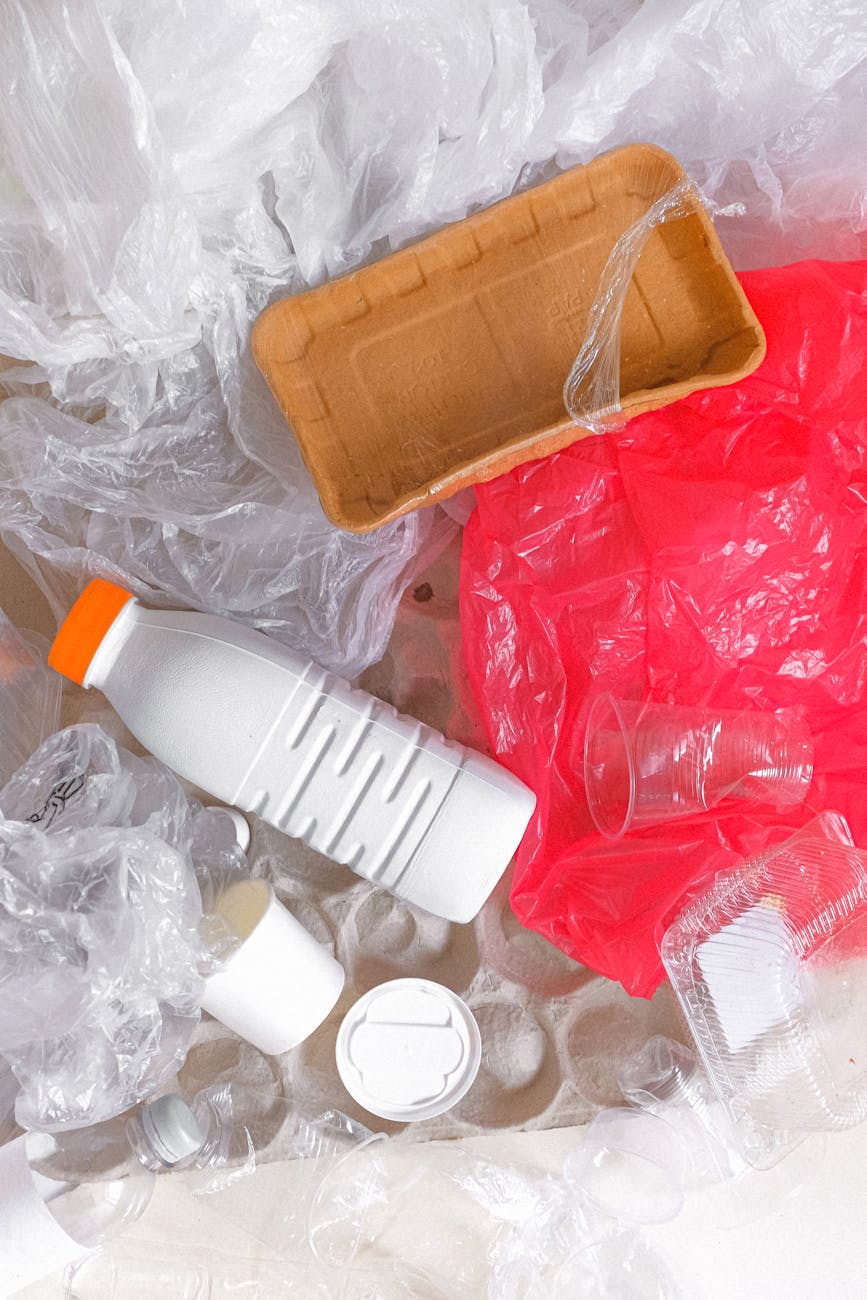
The story of the plastic bottle has no single villain. It has Nathaniel Wyeth, the DuPont engineer who in 1973 patented the PET bottle: lightweight, durable, cheap. It has Evian, who first put water in plastic and watched an industry transform overnight. It has Perrier, whose 1986 single-use bottle helped ignite a cultural obsession with bottled water that never cooled. It has Nestlé, Coca-Cola, PepsiCo, corporations who industrialised the habit until a million plastic bottles were being consumed every minute across the planet.
And it has consequences none of those inventors or executives could have fully imagined: microplastics in the ocean, in the food chain, in human blood, in the placentas of unborn children. A material designed to last forever, used for something designed to be discarded in minutes.
The difference between plastic and dynamite is that plastic has no single conscience to haunt. Nobel had a name on the obituary. Oppenheimer watched the flash. But the plastic crisis arrived slowly, anonymously, distributed across thousands of boardrooms and quarterly earnings reports. Nobody had to look in the mirror at the specific moment of reckoning. And yet the reckoning has come anyway. Microplastics in our bloodstream are no longer a hypothesis. They are a measurement.
History suggests the most powerful corrective force is not the regulator or the activist. It is the insider, the person who built the system, who knows where the leverage points are, who has the relationships and resources to change things in ways outsiders simply cannot. Somewhere in the petrochemical supply chains and packaging divisions of the world’s largest companies, there are people who understand exactly how this crisis was built.
Nobel needed a premature obituary. Oppenheimer needed a blinding flash in the desert. Bernays needed to watch his own tools turned toward ends he found monstrous.
Who from the world of plastic, of single-use packaging and corporate convenience, will one day look at the full weight of what has been created and decide that their most important act is not their next launch, but their last great act of conscience?
And will they move before the damage becomes irreversible, or, like so many before them, only after they have read their own obituary?

